 Greek
 English
Amaliada
67 Eptanisou & Karaiskaki

Complete the form and our team will guide you to the right training or certification programme.
Programme leading to Professional Experts certification by GLOBAL CERT, accredited by ESYD
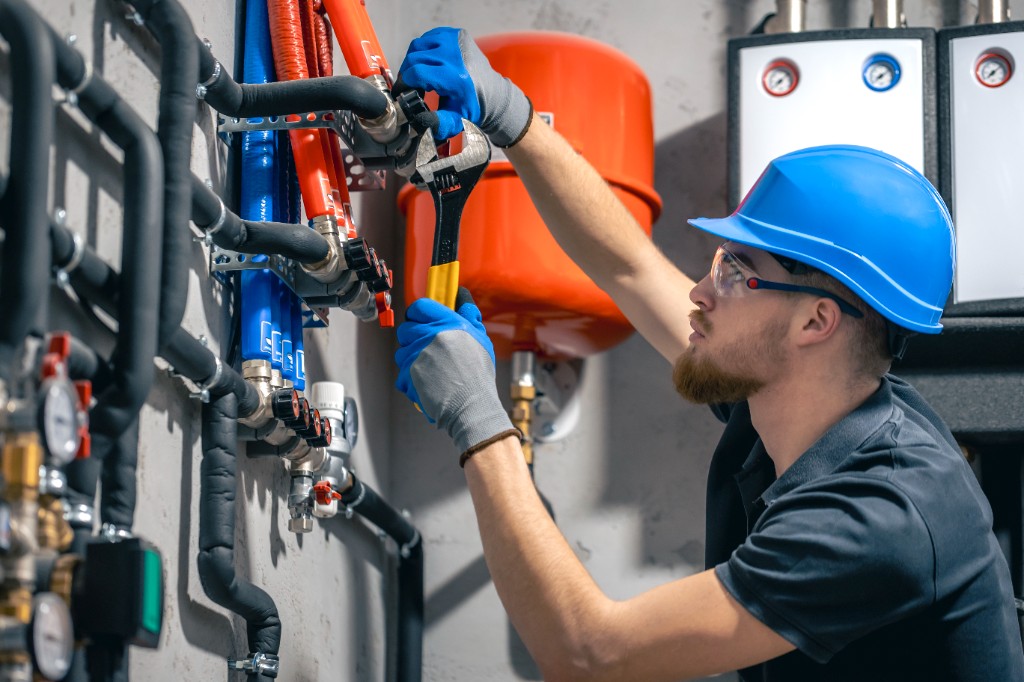
The KDBM EPIKENTRO VOCATIONAL TRAINING, a KDBM certified by the National Organisation for the Certification of Qualifications and Vocational Guidance (EOPPEP) and the Ministry of Education, Religious Affairs and Sports (certification code: 2000540), is delivering a seminar titled “Natural Gas Technician”.
The “Natural Gas Technician” programme organises, in 100 hours of theoretical training, the basic technical knowledge on natural gas, its transport and distribution, supply networks, piping, pressure-regulating devices, safety, and the organisation of work on the construction, extension, repair and maintenance of networks.
The training aims at systematic theoretical preparation for knowledge certification examinations in the subject “Natural Gas Technician”. The allocation of hours is an educational proposal of the training provider. Attendance does not replace a professional licence, required previous experience, specific authorisation from the network operator or practical certification of work on live networks.
Trainees should understand the properties and risks of natural gas, interpret the operation of networks and installations, recognise materials and components, evaluate technical specifications and describe correct procedures for design, inspection, maintenance and fault management, with priority given to safety and regulatory compliance.
The programme is aimed at prospective technicians, employees of technical companies and staff taking part in related work under the lawful requirements and authorisations.
The programme has a total duration of 100 hours, corresponding to 5 ECVET CREDITS, and is structured into the following modules:
Trainees will be able to describe the professional scope, duties and limits of competence of the natural gas technician, and to explain the composition, properties, uses and the transport and distribution route of natural gas. In addition, they will be able to recognise regulators, pipelines, piping, connections and basic network materials, interpret technical drawings and understand basic quantities of pressure, flow rate and flow velocity, as well as the construction phases of new networks and the related technical documentation.
At the same time, they will be able to recognise the particular risks associated with the extension, conversion and repair of live networks, select at a theoretical level the appropriate prevention, inspection and maintenance measures, and understand the requirements for safe technical management. Finally, they will be able to answer theoretical certification questions with substantiation and interpret technical scenarios, using the knowledge acquired during the training.
The teaching process is based on targeted theoretical presentations, using technical diagrams, photographs of components, manuals, technical data sheets and drawings, as well as study of real incidents and consolidation questions. During teaching, for each system its purpose and operating principle, basic elements, operating parameters, common failures and the requirements for safe technical management are analysed. Particular emphasis is placed on the safe management of live networks, which are approached exclusively at a theoretical level, without instructions for carrying out hazardous interventions or practical work under pressure.
Trainees are assessed both during and at the end of the training, through short self-assessment questions, exercises on identifying materials, components and technical drawing symbols, and case studies focusing on risk assessment and correct fault reporting. The process concludes with a final theoretical test, which includes knowledge, application and safety questions.
The indicative internal weighting of the assessment is 30% for formative activities and 70% for the final theoretical assessment. The terms and conditions of external certification are determined exclusively by the competent certification body.
At the end of the programme, trainees receive a Certificate of Successful Attendance accompanied by a Diploma Supplement and certification through the GlobalCert Certification Body, after passing the exams.
contact tel.: 2622024341
email: seminars@epikentroedu.gr
Reach us at any of our branch offices.
67 Eptanisou & Karaiskaki
Heroes’ Square (Plateia Iroon)
1 Dounia St




We respect your privacy
We use cookies to offer you the best possible experience on our website. You can learn more about the cookies we use or disable them in settings. Cookie policy.
We use cookies for the operation of the site and, with your consent, for statistics. Privacy Policy
Necessary cookies are absolutely essential for the proper functioning of the website. This category includes only cookies that ensure basic functionalities and security features of the website. These cookies do not store any personal information.
Used for anonymous traffic statistics via Google Analytics. Your consent is required.