 Greek
 English
Amaliada
67 Eptanisou & Karaiskaki

Complete the form and our team will guide you to the right training or certification programme.
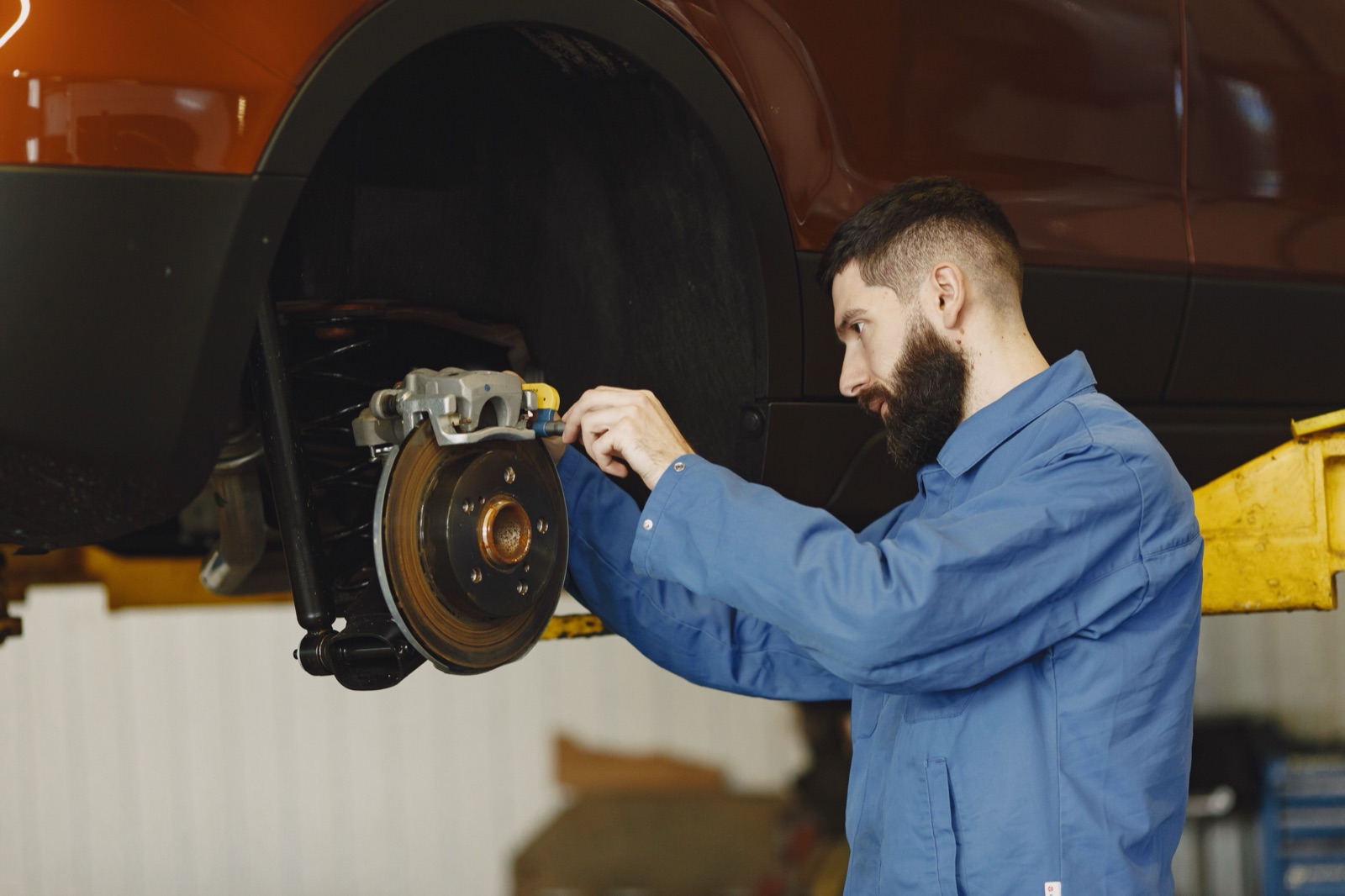
The KDBM EPIKENTRO VOCATIONAL TRAINING, a KDBM certified by the National Organisation for the Certification of Qualifications and Vocational Guidance (EOPPEP) and the Ministry of Education, Religious Affairs and Sports (certification code: 2000540), delivers seminars for skilled vehicle craftsmen (emperotechnes) to obtain the licence of Braking System Technician.
Training certification certificates are issued as provided for by law for obtaining a trade practice licence (based on the syllabus defined by Decision No. 73102/715/1988 (B 302) of the Minister of Transport and Communications).
The programme is designed for employees, technicians and interested persons in the automotive sector who wish to organise, supplement or update their knowledge and skills in the inspection, maintenance and repair of vehicle braking systems.
The programme is aimed at technicians and employees in the field of vehicle repair and maintenance who wish to strengthen, supplement or update their knowledge of braking systems. It is also aimed at employees of car workshops, commercial vehicle workshops and related technical businesses, as well as people who wish to obtain organised vocational training in the subject of braking systems.
It is also aimed at technical staff who need systematic revision and updating of their knowledge of the operating principles, inspection and diagnostic procedures, and the safety rules governing vehicle braking systems.
The programme has a total duration of 100 hours, corresponding to 5 ECVET CREDITS, and is structured into the following modules:
On completing the programme, trainees are expected to have acquired, and to be able to apply, basic knowledge of the operation of vehicle braking systems and their individual components. In particular, they will be able to recognise the basic components, their functions, and possible wear and malfunctions, carry out basic checks and identify signs of problems in the braking system.
At the same time, they will have become familiar with the basic inspection and diagnostic procedures, as well as the required practices and safety rules when carrying out maintenance and repair work. In addition, they will be able to make a basic assessment of the condition of braking systems, recognise cases that require further technical inspection and apply the knowledge they have acquired in their professional activity, strengthening their technical competence and updating their knowledge in line with the modern requirements of the sector.
The training is based on linking theory with technical application. Explanatory texts, functional diagrams, technical examples, comparative checks, diagnostic scenarios and case studies are used. The teaching approach emphasises understanding how things work and substantiated diagnosis rather than memorising lists of faults.
Where specific values, wear limits, pressures, tightening torques, electrical values or special procedures are required, the technical data and instructions of the manufacturer of the specific vehicle or component are used.
After successful completion of the programme, participants receive a Training Certificate accompanied by a Diploma Supplement.
Please note: The seminar certificate is not in itself a trade practice licence and does not guarantee that one will be issued. The requirements are examined by the competent Transport Directorate of the Region on the basis of each candidate's qualification, previous experience and other supporting documents.
Before enrolling, interested persons are advised to confirm in writing with the competent service whether this training can be used in their individual file.
Reach us at any of our branch offices.
67 Eptanisou & Karaiskaki
Heroes’ Square (Plateia Iroon)
1 Dounia St




We respect your privacy
We use cookies to offer you the best possible experience on our website. You can learn more about the cookies we use or disable them in settings. Cookie policy.
We use cookies for the operation of the site and, with your consent, for statistics. Privacy Policy
Necessary cookies are absolutely essential for the proper functioning of the website. This category includes only cookies that ensure basic functionalities and security features of the website. These cookies do not store any personal information.
Used for anonymous traffic statistics via Google Analytics. Your consent is required.